RISC-V
KianV RV32IMA
RISC-V SoC running Linux on GF180MCU

Budget silicon manufacturing.





New half-width (0.5×1 slot) and half-height (1×0.5 slot) options — 1,000 dies for $4,000 with Early Bird pricing.
See Half Slot PricingLock in early bird pricing for GF180MCU Run 2
days
hours
minutes
seconds
Final deadline to purchase a slot and submit your GDS
days
hours
minutes
seconds
| Milestone | Date | Description |
|---|---|---|
| Campaign Opens | 1 March 2026 | Run 2 slots available for purchase on Crowd Supply |
| Early Bird Deadline | 30 April 2026 @ 11:59 PM AoE | Last day to purchase at early bird pricing |
| Purchase & Submission Deadline | 30 June 2026 @ 11:59 PM AoE | Final deadline to purchase slots and submit GDS files |
| Parts Shipped | Early Q4 2026 | Bare dies and packaged parts shipped to customers |
Professional design services are available from independent consultants experienced with the GF180MCU process. Whether you need a full custom design, help with verification, or guidance on your first tapeout, experts are ready to assist.
| Feature | 1×1 Slot |
New! 0.5×1 Slot |
New! 1×0.5 Slot |
|---|---|---|---|
| Die Size | 3.93 × 5.12 mm | 1.94 × 5.12 mm | 3.93 × 2.53 mm |
| Die Area | 20.12 mm² | 9.93 mm² | 9.94 mm² |
| Usable Silicon† | 19.65 mm² | 9.57 mm² | 9.61 mm² |
| Core Area* | 12.92 mm² | 4.46 mm² | 5.02 mm² |
| Default I/O Pads† | 56 | 56 | 56 |
| Max I/O Pads‡ | 168 | 122 | 108 |
| Early Bird Price | $7,000 | $4,000 | $4,000 |
| Standard Price | $7,500 | $4,500 | $4,500 |
| Per Die (Early Bird) | $7.00 | $4.00 | $4.00 |
†Default pad ring I/O count. The default pad ring is only required if you purchase the Chip on Board packaging add-on.
‡Maximum I/O with a custom pad ring from the LibreLane pad ring generator. You are free to use any pad ring configuration — or no pad ring at all.
*Usable silicon = die area minus seal ring (~26µm each side). Available with a custom pad ring or no pad ring.
*Core area = area inside the default pad ring.
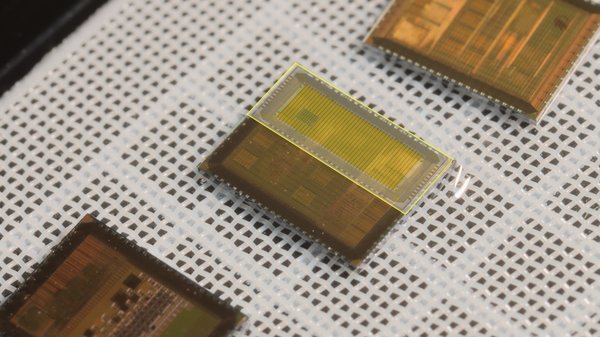
USD $4,000
USD $4,500
The half-width (0.5×1) slot delivers a tall, narrow die — ideal for I/O-heavy designs where signals concentrate along the long edges. Perfect for medium-complexity digital or mixed-signal projects, at just over half the cost of a full slot.
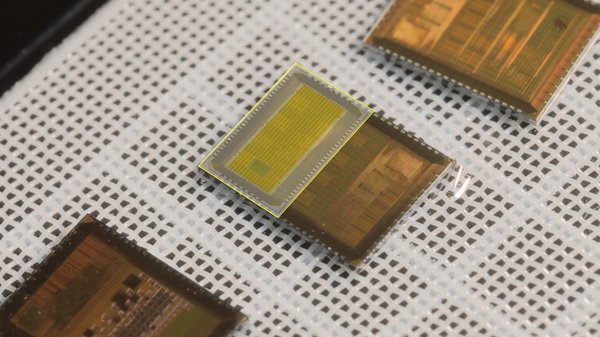
USD $4,000
USD $4,500
The half-height (1×0.5) slot gives you a wide, short die — ideal for designs that benefit from a wider core. Offers slightly more core area than the half-width slot at the same price.
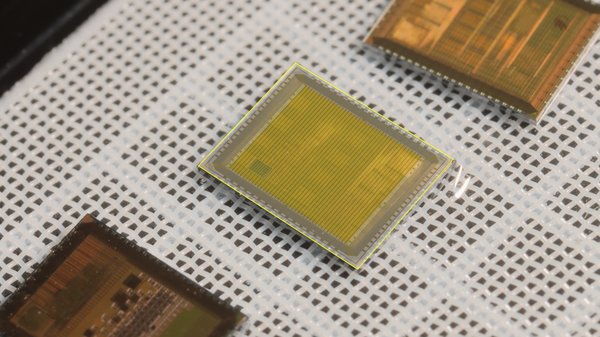
USD $7,000
USD $7,500
The full-size slot gives you the largest die area and maximum I/O count. Ideal for complex SoCs, full mixed-signal designs, or projects that need the most routing and core area.
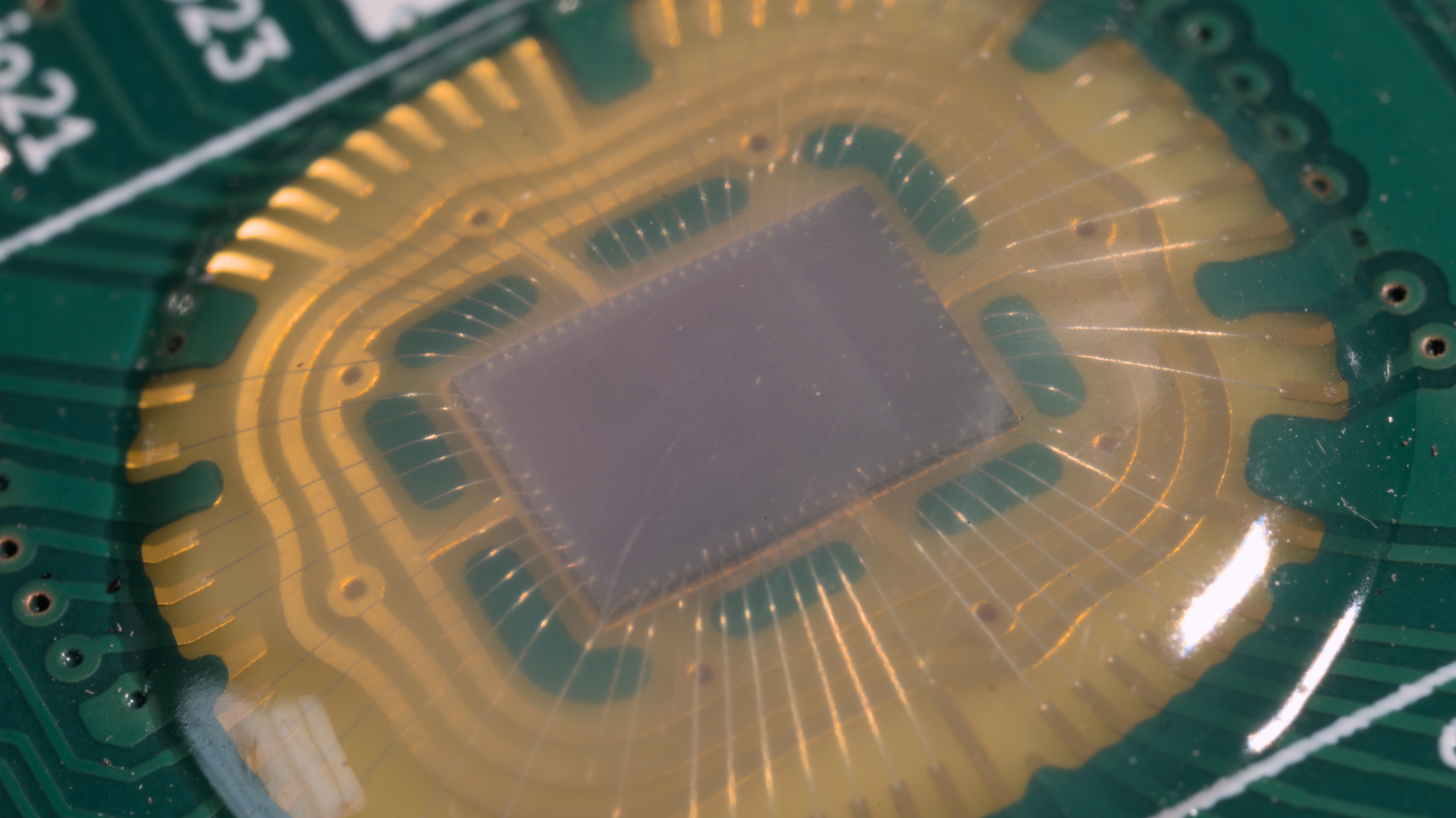
Receive your dies wire-bonded onto small PCBs, ready for testing and integration.
Add-on to any slot purchase. Requires the default pad ring.
Add to Order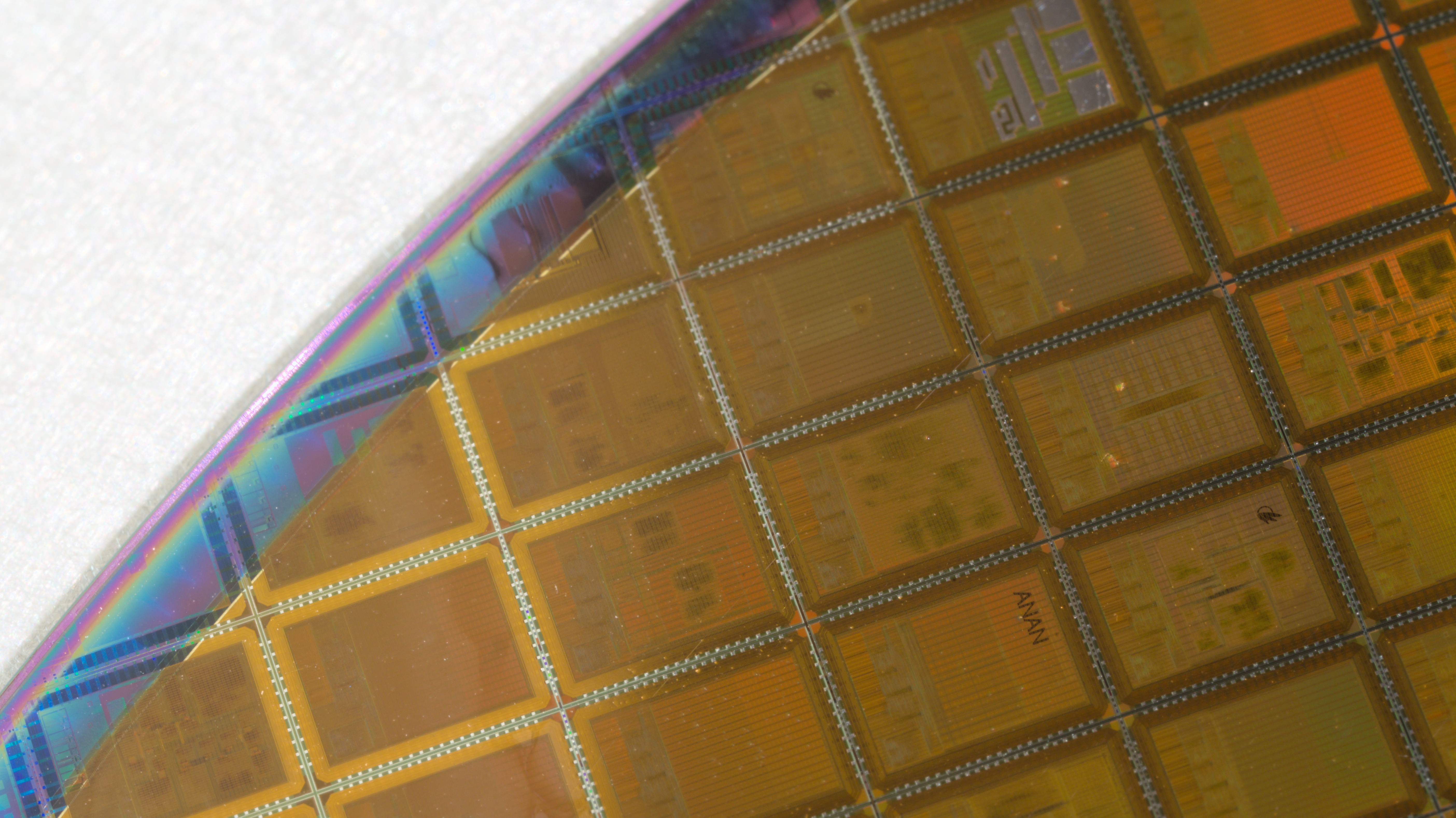
Take home a complete 200mm wafer with your design alongside other Run 2 projects.
Requires slot purchase
Add to Order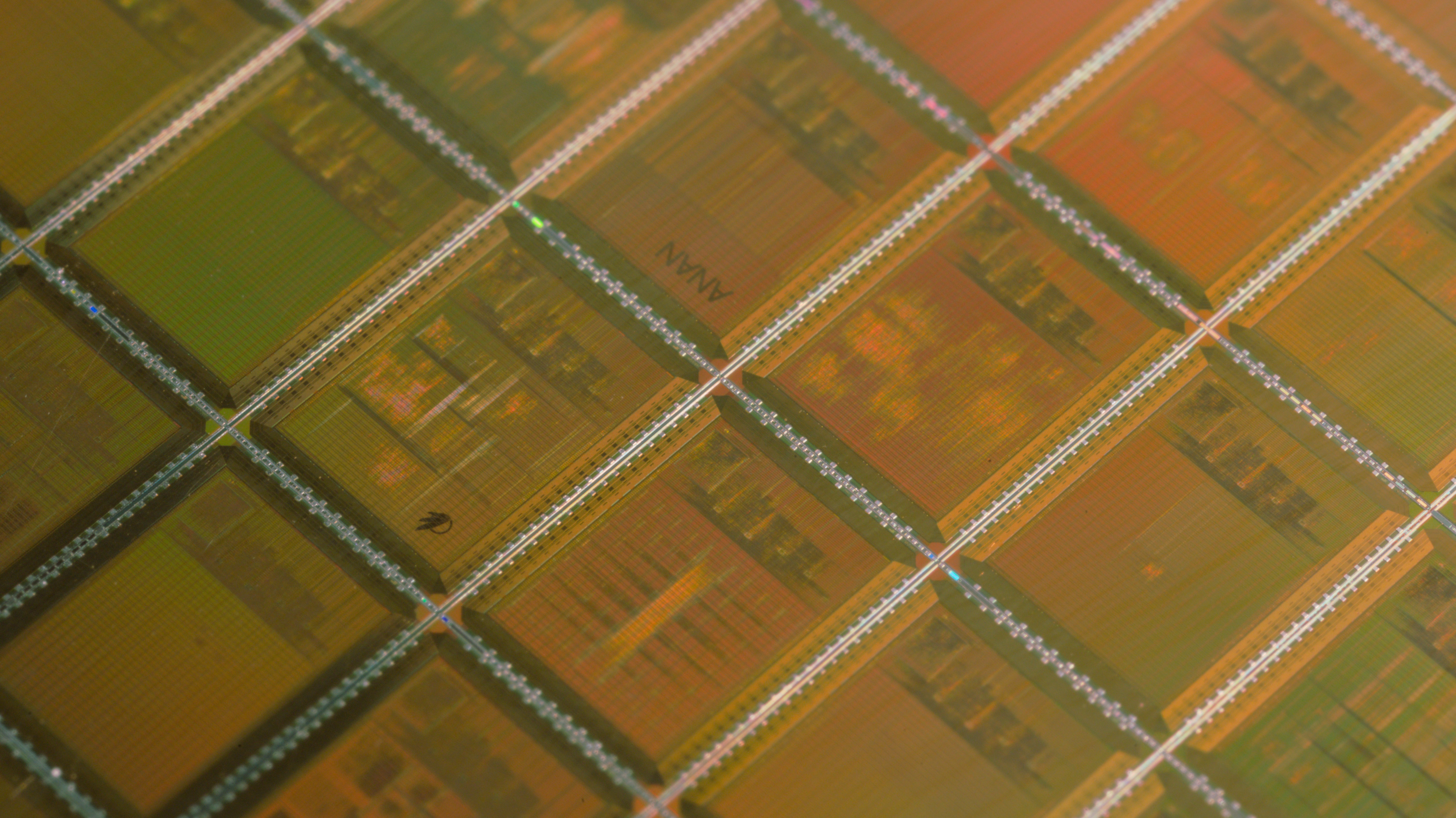
3 Sizes
1×1, 0.5×1 half-width, 1×0.5 half-height
5 Layers
Full routing capability
1,000 dies
Per manufacturing slot
MIM & MOS
Metal-insulator-metal and MOS capacitors available
Poly & High-Res
Multiple resistor types
Silicon currently in fabrication — expected delivery late April 2026
1×1 slot
1×1 slot
1×1 slot
1×1 slot
1×1 slot
1×1 slot
1×1 slot
1×1 slot
1×1 slot
1×1 slot
Hard upper bounds — if you packed cells edge-to-edge with zero routing overhead
Flip-Flop (FF_1)
per mm² theoretical max
Buffer (BUF_4)
per mm² theoretical max
3-input AND (AND3_2)
per mm² theoretical max
Typical Range
logic cells/mm² for most digital designs
across 24 designs
| Design | Library | Core SC/mm² | % of max | Logic Cells | SRAM |
|---|---|---|---|---|---|
| Cloneless1 | 7t-5V | 22k | 44% | 316k | 0 |
| Tiny Tapeout (52 sub-designs) | mixed | 14k | 29% | 204k | 0 |
| FABulous FPGA | 7t-5V | 14k | 29% | 204k | 12 |
| Chess Move Gen. | 9t-5V | 10k | 25% | 145k | 0 |
| FazyRV Hachure | 7t-5V | 7k | 14% | 101k | 40 |
| KianV RISC-V | 9t-5V | 6k | 16% | 89k | 42 |
| Racquet 23-core | 7t-5V | 5k | 11% | 78k | 46 |
Data from the Run 1 Density Report. Logic cell counts exclude infrastructure cells (fillers, taps, antenna diodes). “% of max” compares against buf theoretical max for each library (50k for 7-track, 40k for 9-track).
| Cell Type | 1×1 Slot |
New! 0.5×1 Slot |
New! 1×0.5 Slot |
|---|---|---|---|
| Flip-Flop (FF_1) | ~185,014 | ~63,867 | ~71,886 |
| Buffer (BUF_4) | ~393,156 | ~135,718 | ~152,759 |
| 3-input AND (AND3_2) | ~508,790 | ~175,635 | ~197,688 |
Theoretical maximums with zero routing overhead. Run 1 designs typically achieved 10–44% of these values.
| SRAM Type | Voltage | 1×1 Slot | 0.5×1 Slot | 1×0.5 Slot |
|---|---|---|---|---|
| GF 5V sram512x8 | 5V | 40 kilobytes (80 blocks) | 20 kilobytes (40 blocks) | 20 kilobytes (40 blocks) |
| GF 5V sram256x8 | 5V | 28 kilobytes (112 blocks) | 14 kilobytes (56 blocks) | 14 kilobytes (56 blocks) |
| 3.3V sram1024x8 | 3.3V | 108 kilobytes (108 blocks) | 54 kilobytes (54 blocks) | 48 kilobytes (48 blocks) |
| 3.3V sram512x8 | 3.3V | 90 kilobytes (180 blocks) | 45 kilobytes (90 blocks) | 42 kilobytes (84 blocks) |
| 3.3V sram256x8 | 3.3V | 66 kilobytes (264 blocks) | 33 kilobytes (132 blocks) | 33 kilobytes (132 blocks) |
Block counts use die area minus seal ring (26µm each side). Run 1’s most SRAM-heavy design (RISCBoy-180) used 60 blocks in a full slot.
Theoretical numbers use core area (with default pad ring). Using your own pad ring or no pad ring increases available area.
Real designs achieve 10–44% of theoretical max due to routing overhead, infrastructure cells (~75% of instances), power planning, and clock distribution.
3.3V SRAM blocks from Tim Edwards and Tholin, introduced in Run 1.
Full analysis: Run 1 Standard Cell & SRAM Density Report.
We've partnered with Tiny Tapeout to create a pathway into silicon manufacturing. Start learning with their educational platform for just $50-300, then transition to wafer.space for dedicated chip and low-volume production.
Learn MoreStart with Tiny Tapeout to understand chip design fundamentals
Use shared tile space to test and validate your concepts
Move to wafer.space for dedicated chip manufacturing
Continue with wafer.space for low-volume production