
We Have Some Amazing Projects This Run: MOSbius
Our first shuttle run spans from solo makers like Tholin to universities. This week we highlight MOSbius, an educational platform from Columbia University bringing hands-on silicon learning to students worldwide.
Through wafer.space, MOSbius gains 3.3V compatible I/Os, high part counts, and COB packaging—all for a low cost. What was once an expensive demonstration can now equip every student in a classroom with their own chip, for less than the cost of a textbook.
MOSbius
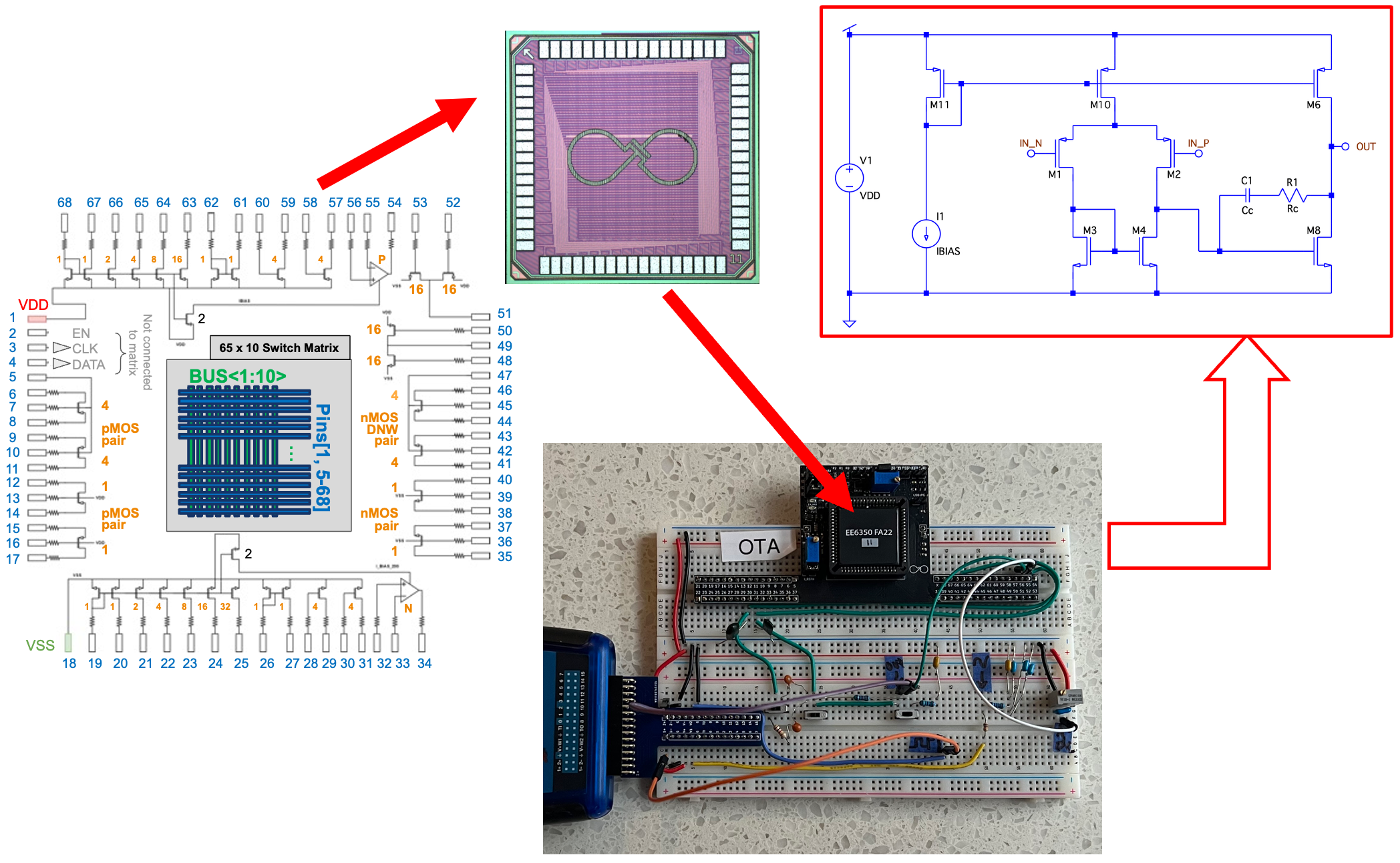
MOSbius platform enables hands-on exploration of transistor-level MOS circuits on breadboard
MOSbius, developed by Professor Peter Kinget and his students at Columbia University, is an innovative educational platform that helps students and designers explore MOS circuit topologies typically found on silicon and now accessible on a breadboard.
The goal of MOSbius is to give learners hands-on experience with transistor-level design, including circuit debugging, measurement, and the full “chip bring-up” process. The platform allows users to compare calculations, simulations, and real measurements using provided LTspice models, bridging the gap between theory and silicon.
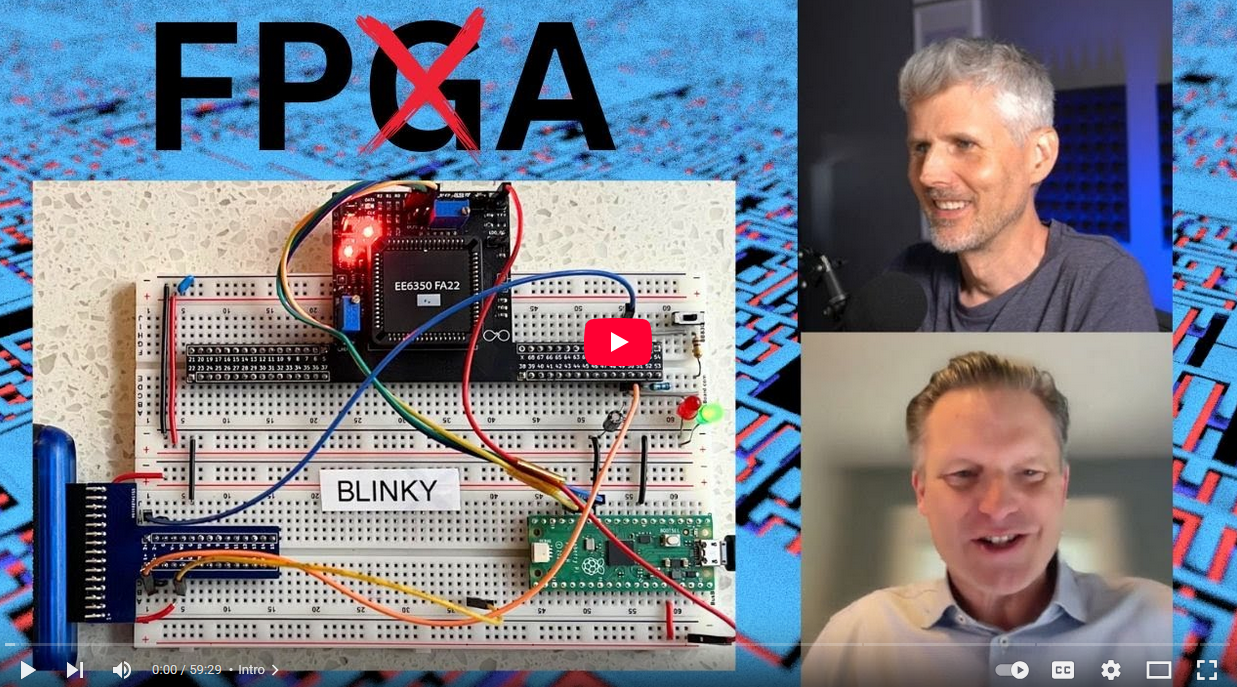
MOSbius – A Field Programmable Transistor Array for Chip Designers (Interview with Peter Kinget)
Watch the interview on YouTube
Building on Previous Success
MOSbius isn’t new to custom silicon. Previous generations of the MOSbius chip demonstrated the educational value of hands-on transistor exploration, but faced a significant barrier: cost. At $50 per packaged chip, widespread educational deployment remained challenging.
The project’s educational impact extends beyond the classroom. The IEEE SSCS Chipathon 2025 featured a MOSbius track where students learned chip design using GF180MCU—the same process used by wafer.space. This gave Chipathon participants hands-on experience with the same technology they could use for future fabrication runs.
Their Own COB Format
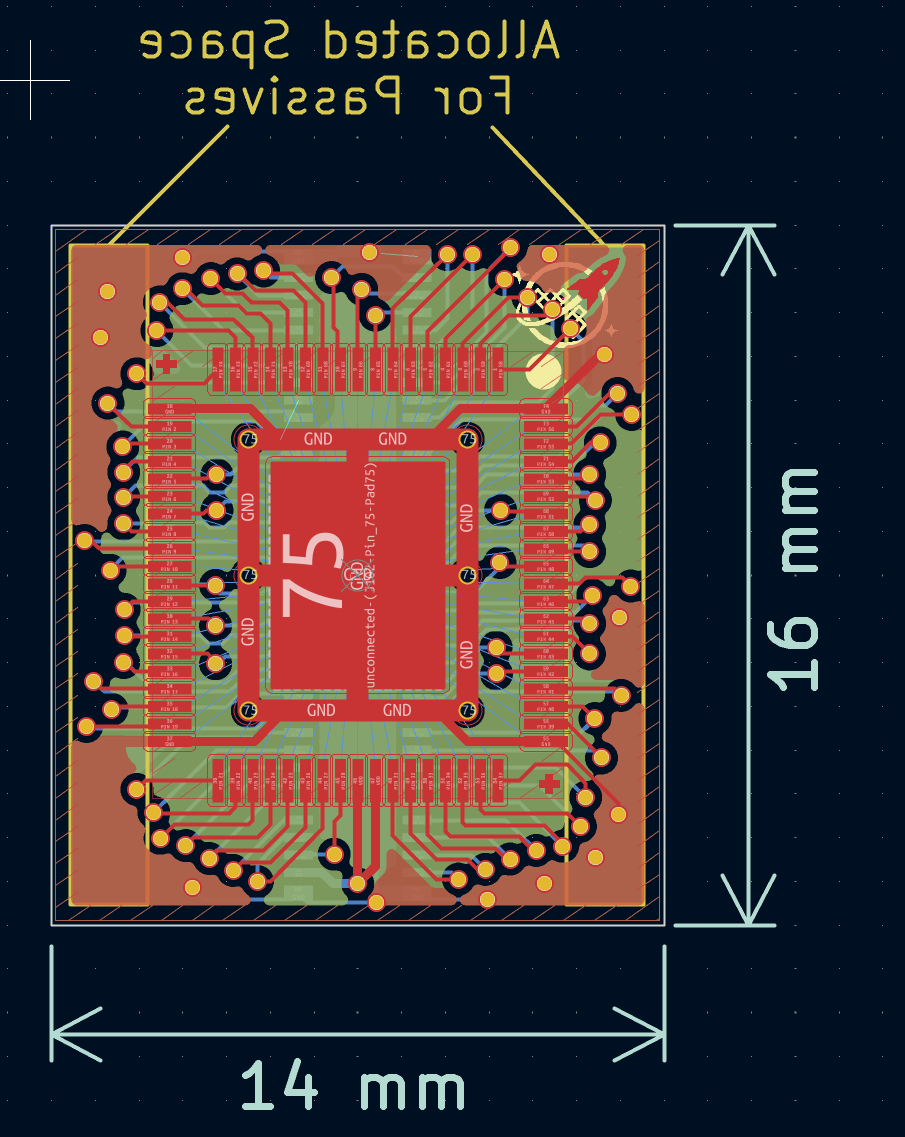
Given the unique requirements of the MOSbius project, the team is designing their own version of a Chip-on-Board (COB) package based on the wafer.space standard padframe.
Their application prioritizes a high number of I/O connections over power and ground pads, allowing for the maximum number of accessible signals from their transistor array.
 |
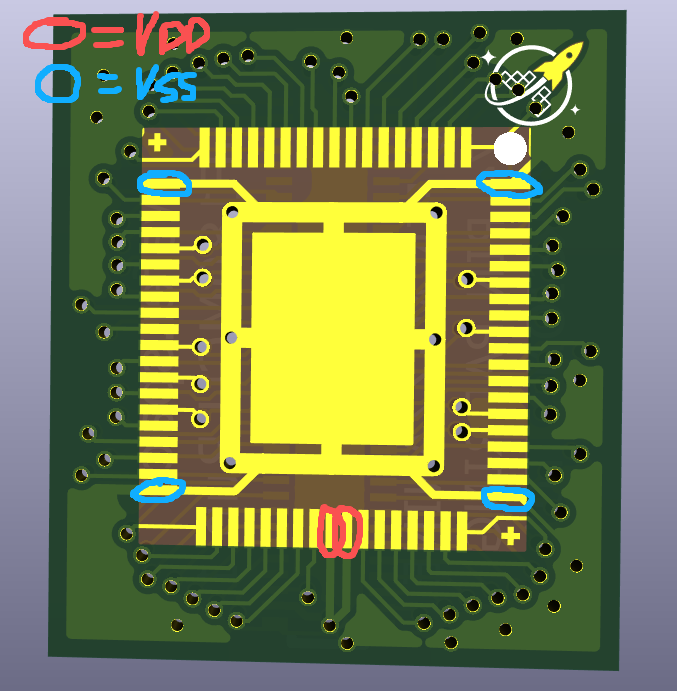 |
| MOSbius custom COB package design - PCB layout and 3D visualization | |
Peter’s student, @xianglin_pui, has taken the lead on this effort and developed derivative designs that extend the wafer.space COB standard for MOSbius’s specialized needs.
wafer.space and MOSbius
We’re thrilled to have MOSbius as part of this shuttle run and proud to support a project that aligns so perfectly with wafer.space’s mission.
Their current board design requires numerous passive components due to varying pin voltage levels, and each packaged chip can cost upwards of $50. With their new design on the wafer.space platform, all pins will be 3.3 V tolerant, eliminating the need for numerous passive components and dramatically simplifying their demo board, while wafer.space’s affordable pricing and COB packaging reduce costs.
Don’t Miss Your Chance to Join the First Shuttle
wafer.space - Accessible custom silicon fabrication
MOSbius is part of this run because accessible silicon enables their educational mission. What becomes possible at $7/chip? Whether you’re building educational tools, exploring new architectures, or bringing vintage designs back to life - this is your opportunity.
We’re rapidly approaching the final milestones for this shuttle run, and now is the time to secure your spot:
-
November 28, 2025 - Last day to purchase a slot / Crowd Supply campaign closes
-
December 3, 2025 - Final GDS submission deadline
If you’ve been thinking about getting your own silicon made — whether it’s your first chip or your fiftieth — this is your moment. The tools are ready, the ecosystem is growing, and we’re here to help you every step of the way.
Reserve your slot, finish your design, and join us in shaping the future of accessible custom silicon.
This update was originally published on Crowd Supply.